
Auckland Art Gallery upgrades with JBL and BSS
Published: ASIA
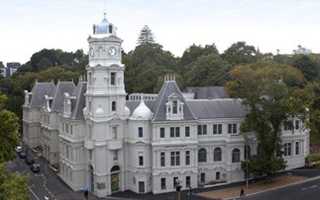
NEW ZEALAND: Jands and Provision recently worked together to provide a networked audio system as part of a major A/V upgrade for the Auckland Art Gallery Toi o Tamaki. The venue is reported to be New Zealand's oldest and largest public art gallery, and recently underwent a massive restoration which included installing a total of 250 JBL speakers, including Control 26CT, Control 24C and Control 52 satellite speakers.
One of the design challenges was to provide an audio network with up to 25 discrete zones and over 100 patchable inputs (four per zone), as well as a separate BGM and paging level control per zone. Each of the 25 zones then needed the flexibility to be virtually patched to any combination of other zones. However, the team decided that the BSS London Blu-100 range of signal processors with built-in 48-channel digital bus gave the flexibility required to make this work within the budget.
‘This project was unique, in that two of the buildings we were cabling were Heritage Buildings over 100 years old, and not linked, while demolition and construction continued around us,’ said Stephen Ward, project manager and lead designer for the project. ‘I was able to draw from my knowledge and experience from working and maintaining similar heritage sites in the UK, such as the Royal Society of Art and Tate Britain to assist with the planning and implementation of this project, allowing me the insight and understanding as to how the client would ideally use the spaces.
‘The audio was of high importance due to the changing nature of the open spaces in the art gallery and varying exhibitions, and the use of the BSS London Soundweb DSP allowed us complete flexibility in its design and linking,’ he continued. ‘This provides the ability to expand the A/V systems in a modular way and meet the users ever changing needs.’
Provision went about installing 10 BSS Soundweb Blu-100’s between the five A/V plant rooms. An audio network was setup between the plant rooms using fibre optic cable, which linked the 48 channel digital audio network and Ethernet control. Then the team members turned their attention to mapping the level controls from 10 different Soundweb DSPs.
‘The actual programming was relatively straight forward once a clear scope of works and client discussions in developing the interface were conducted,’ explained Logan Bent, programmer for Provision, who integrated the whole system. ‘The most time consuming component during implementation and commissioning was the grand scale of the project. The greatest challenge with the interface was coming up with a way to overflow any of the inputs to any of the output zones.’
www.bssaudio.com
www.jandsnz.com
www.jblpro.com
www.provision.co.nz