
Dub step three
Published: ASIA
When partnering with the Chinese government for its Xi Xin project in 2006, Merging Technologies unwittingly took on its biggest venture yet. Alice Gustafson reports.
No stranger to large-scale and expansive projects, in 2000 China embarked upon one more; intent on spearheading the development of broadcasting in rural and minority areas. With a particular focus on districts such as Xinjiang, Tibet and Inner Mongolia, the Chinese government-funded Xi Xin project was born.
In fact, the ambitions project sought to improve broadcasting coverage to 91.41 per cent and by 2010, had already received billions in funding. Right on schedule, the second phase began in 2006 with a focus on dubbing to ensure that TV programmes would be understandable in the native minority languages of Uyghur, Kazakh, Tibetan, Mongolian and even Korean.
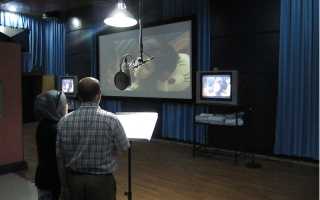
Merging Technologies was tasked with providing Pyramix digital audio workstations to ensure the success of the mass dubbing undertaking, but little did the Swiss company know that come 2015, it is likely to be its biggest project yet. Already impressive, the company has so far successfully installed over 90 Pyramix workstations, 70 of which are located in the Xinjiang region alone.
Merging Technologies’ involvement in the project can largely be attributed to the ever-modest Weishen Xu, Merging Technologies’ Asia president, who through his time spent in China in the past (he is now based in Canada) has created a network of trusted contacts, and more importantly, friends.
‘He is pretty modest, but all the projects we get in China are due to Weishen and his contacts,’ confirms Merging Technologies’ head software engineer Dominique Brulhart, who collaborated on-site for the Xi Xin project alongside local companies Dayang, Sobey and Guanhua to provide systems management, video NLE, integration support and sales.
‘These are three huge companies that manufacture mainly video equipment for broadcast, so video editors, servers, asset management, the entire range,’ he nods. ‘We have been in contact with them through Weishen for many years and have since started integrating with their equipment as well.’
The Xi Xin project coverage includes the four autonomous regions of Tibet, Xinjiang, Inner Mongolia, Ning Xia and four provinces of Qing Hai, Gan Su, Si Chuan and Yun Nan. Not stopping there, it also encompasses Fu Jian, Zhe Jiang, Guang Xi, Hai Nan and Ji Ling.
'The total broadcasting coverage is 4,980,000 sq-km, or 51.9 per cent of the Chinese territory,’ Mr Xu confirms. ‘The central government has spent 4 billion Yuan so far on this project. Any region containing over 50 households is guaranteed to receive a signal.’
Clearly meaning business, in 2008 China launched an ABS-S television standard satellite in order to cover previously signal devoid zones, the slogan being ‘reception from village to village’. Mr Xu believes that Merging’s success in this program was due to the company’s understanding of the paradigm shift in China from single unit workstations towards a networked tapeless and paperless audio-video management system. One of the key elements that facilitated this shift was the open structure of Merging’s software and hardware.
‘We installed the Pyramix workstations with our own audio hardware called Mykerinos, in addition to some convertors,’ says Mr Brulhart, effortlessly reciting from memory. ‘The rest of the equipment we had to integrate with was mainly Yamaha mixing consoles, specifically DM2000VCMs and DM1000s, as well as the Dayang servers and video players and some small controls.’ Merging used its own Isis remote controls for editing and mixing.
‘All that you get on TV today is dubbed for this project using our workstations,’ he explains. ‘News, programmes, films, series, documentaries, anything! That very plan that was started 10 years ago was to produce content for the internal and autonomous regions inside China. Their goal was to translate content to keep those languages alive.’
Indeed, the influence of Hollywood and American-produced sitcoms cannot be ignored in most places in the world, but efforts can be made to simultaneously embrace it, whilst keeping the content familiar. ‘All this is done to keep not just the language alive, but the culture,’ Mr Brulhart reflects. ‘Now, TV series’ all around the world are mostly American, and it doesn’t always have much to do with the cultures in other countries. So using Pyramix, at least their language is preserved for them.’
Phase three
The Xi Xin project continues to grow; based on information from the Xinjiang region, the archiving centres are currently able to process approximately 7,000 episodes per year. ‘In the upcoming third phase, they are planning to double that number,’ Mr Xu tells Pro Audio Asia. ‘By 2015 the number of programmes dubbed per year should reach 14,000.’
‘They are finalising plans to double those numbers,’ nods Mr Brulhart. ‘As Weishen says, they currently translate 7,000 episodes per year, so it works out as approximately 20 programmes per day – and they intend to double that very soon. We’ll be working very intently on phase three for both Xinjiang and Tibet this year to double the size of the translation and equipment in those regions.’
Swiss-manufactured products carry a good reputation in China, another fact leaning in Merging’s favour. ‘We do pretty good and very precise equipment, and the price also matched the client’s expectations,’ Mr Brulhart says modestly. ‘Another thing that has been really important during the negotiations is our capacity for customisation for the installation. This includes us providing special integration, translations in Chinese and an openness to make special tweaks if needed. Another thing is that Weishen has a great relationship with the client in China, so that always helps!’
Mr Brulhart confirms that Merging’s products function so well in fact, that he rarely hears of any updates to existing installations in China, a fact he attributes to the company’s hard working local partners.
‘The great thing we have in the Chinese market is that out partners are very efficient, knowledgeable and technical, so we basically never hear anything about our installs!’ he laughs. ‘They deal with everything out there, and have direct contact with the clients. We only ever hear the good news, and China is a country that we really like working with; most of the time our projects there are really smooth.’
The reliable partners in question comprise Merging Asia – presided over by Mr Xu himself – and Guanhua Glory AV whilst Merging also relies heavily on Sony-owned Sobey and complete systems integration company Dayang. ‘The relationship we have with these companies – especially where Dayang is concerned – allows for a really smooth integration,’ he stresses. ‘They deal with most of the technical issues and deployment directly; we are only informed about any big problems, which is very rare.’
For an undertaking spanning three stages, costing millions and comprising over 90 workstations across multiple territories (with many more to come) the project has been surprisingly challenge-free for all involved; another nod to the efficiency of Merging’s products and the skills of its local partners.
‘It may be hard to believe, but there weren’t really any challenges!’ insists Mr Brulhart. ‘Aside from the pure deployment-side of it in certain places; especially in Tibet. Having been there I can tell you that the first three days are not at all pleasant! We had to just wait until our bodies adjusted and got in sync with the altitude.’
At this point both Mr Brulhart and Mr Xu are keen to point out that the Xi Xin project boasts the highest workstation installation in the world in Tibet, and just the opposite in Xinjiang, its lowest point measuring 155m below sea level.
‘This is such an exciting project to be working on because not only are we involved with one of the biggest dubbing projects, but we are able to provide coverage simultaneously to the highest and the lowest points on earth,’ smiles Mr Xu, who now has his sights set firmly on phase three.
‘It is one of the biggest projects we have ever done,’ nods Mr Brulhart. ‘And it’s not over yet! It’s not every day that we deliver over 50 stations; in any TV facility, we would usually deliver up to 20 at the most. But batches of 30 or 40 at a time are very interesting for us as a company.
‘Personally, I’m a traveller so doing things in other countries is always a pleasure, and finding a new civilisation’s way of working and getting to experience that is always interesting for me,’ he reflects. ‘But from a purely technical point of view, we have definitely cemented a lot of relationships out here.’
As the Xi Xin project approaches the closing stages of phase three negotiations, Merging can rest with the knowledge that through this venture it has gained significant recognition within the Chinese audio community.
‘If all goes well and according to plan, after phase three this should be one of our biggest projects ever,’ smiles Mr Brulhart. ‘We are talking hundreds of stations. These things always take time, but we are confident that by phase three, the Xi Xin project will represent a significant milestone for us.’