
Earning a first
Published: ASIA
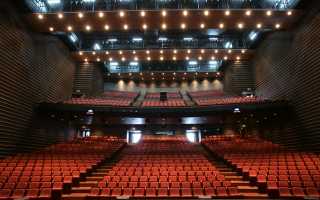
Dongseo University’s Sohyang Arts Hall is now home to South Korea’s first permanent Constellation install. As Barney Jameson learns, the project was an education...
Every major installation depends on the experience and expertise of the people involved, but sometimes a project can also offer a chance to learn new skills. For South Korean Meyer Sound dealer Avix Tech, a recently completed long-term project in the country’s second city, Busan, delivered precisely that. In fact, the design and realisation of the new audio system within Sohyang Arts Hall, located on the campus of the internationally renowned Dongseo University, provided an invaluable learning experience for everyone who was involved.
The reason is Meyer Sound’s Constellation active acoustics system, a technology capable of dramatically altering the reverberant properties of a room in a way that Sohyang Arts Hall general director Song Dae-young has dreamed of for 15 years.
‘In 1999 I was the audio director of the Seoul LG Arts Center,’ he begins, ‘and it was there that I realised how difficult and challenging it can be to tame a reverberant atmosphere. Back then we worked alongside a company to design and install a mechanical system for altering the reverberation times within the auditorium. At first I was a little bit uncomfortable because the way the system altered the acoustics was not electronic’.
The system was based on physical acoustic principles – moving panels and draped cloths to influence the environment, and at the time it represented cutting edge technology. But for Mr Song – a near 30 year veteran of musical theatre whose expertise extends to countless major productions including The Phantom of the Opera and Cats – it was not enough.
Yet over time, and when he arrived at Dongseo University some 10 years ago to lead its new groundbreaking musical theatre education programme, he accepted that it was the best possible solution for what would ultimately become Sohyang Arts Hall. ‘I thought that the system would in fact be very good for Sohyang,’ he continues, before adding: ‘Then in 2010 I found out about Constellation’.
An email to Meyer Sound’s John McMahon quickly followed, leading to a two year collaboration with the manufacturer and Avix Tech as its local representative and installer. But just as Constellation was a new concept to Mr Song, so it was within Korea itself. Though the system has previously been used to great acclaim at the Great Mountains Music Festival, Sohyang Arts Hall represents the first permanent installation of the technology within Korea, and a significant learning curve awaited those working on the project.
Leading the team and confronting that challenge head on was Avix Tech project manager Lee Sung-bok. ‘In the initial stages we had not had any experience of installing this kind of system,’ he candidly explains. ‘It was totally brand new and if there was any change in the construction site, even a small part of the interior, then we had to change the design of the Constellation system as well. We did not have any experience of that - it was new to us. So when there was even the slightest change in the site we made sure to get our plans reviewed and confirmed by Meyer Sound in the US.’
Reflecting on the installation, Mr Lee now describes it as ‘the biggest project I have worked on so far. At the beginning it was too big for me to imagine how big it would become.’ But if the scope and indeed the cost of the project were ever intimidating in those early days then neither Avix Tech nor Mr Song wavered from the plan. Part of the reason is Dongseo University’s dedication to its musical programme, while Mr Song’s own pedigree in audio helped to ensure that nothing but the best would be good enough for the new venue.
‘Some other universities are starting to open musical departments now, but 10 years ago Dongseo was the first Korean university to offer it,’ Mr Song enthuses. ‘The head of the university is very interested in the culture of performance and musicals and a decade ago he toured other countries to look at the performance facilities that could be found elsewhere.’
As a result, he continues, the technology that the university chooses must always be the best in its field. ‘It has to be the best professional equipment, definitely,’ insists Mr Song. ‘The head of the university realises that it’s about more than just the performers – having the best technology and the best sound is a key point. The entire interior finish has been affected by considering sound quality – the chairs, the floor. We have not spared any money in ensuring that we achieve the best possible quality.’
Though the hall has so far been used primarily for the musicals that Mr Song knows so well (including runs of Chicago, Mamma Mia and a notable and highly successful production of Les Miserables) the general director’s ambition from the beginning was for it to become a truly multipurpose venue. Accordingly, plans are underway for classical concerts to take place. Meanwhile, the hall has already taken great strides as a host of the Busan International Film Festival.
Consequently, he adds: ‘We needed cinema surround sound, surround effects and the ability to alter the acoustics – those were the three requirements. We only have one theatre in which we need to take care of all the genres we host and that means it needs different kinds of reverberation. So we needed the highest quality system we could find to tackle that, and that meant Constellation.’
He continues: ‘At the same time, in Korea many universities and mega-churches have a level of technology and equipment that is almost on a par with one another, but the design and installation at the initial stage can vary. It can devalue even the best equipment. So that’s why when we invested so much money into the technology, the interior and the details to get the best sound, we also needed a dream-team of co-workers to achieve the fantastic result that we wanted.’
Close collaboration was the key to the project, and Mr Song, Avix Tech and Meyer Sound representatives from the US quickly set about designing a solution. The completed installation comprises no less than 40 miniature sensing microphones, 157 compact mid-high enclosures and 12 compact subwoofers, all precisely positioned within the hall to optimise performance. The assortment of loudspeakers deployed includes the MM-4XP, UPM-1P, UP-4XP, UPJunior and UPJ-1P models as well as the UMS-SM subwoofer. The brain of the system is its D-Mitri processor core, made up of 17 frames including four DVRAS processors each catering for one of the venue’s four acoustical zones. Additional frames have also been installed for core processing, input/output, GPIO, mixing, and WildTracks digital recording and playback.
Meanwhile, the hall also benefits from a high power Meyer Sound reinforcement system comprising eight UPQ-1P loudspeakers as left and right FOH mains, a centre cluster of 10 Mina compact line array enclosures, two 700-HP subs for low end and additional UPM-1P, UPJunior and UPA-1P cabinets deployed for delay and fill. Two Galileo 616 processors provide loudspeaker management. Crucially, the two Meyer systems have been created to work together. The Constellation design can function as a standalone solution for orchestral performances, or it can be used via selected presets to enhance the performance of the main FOH rig.
The design is elegant, and its fulfilment is arguably among the proudest achievements thus far in Lee Sung-bok’s career in audio, not least because of the physical challenges that Sohyang Arts Hall presented to him. Working closely with his colleagues in the US, he quickly identified a major problem concerning the most important element of any Constellation install – speaker placement.
‘The important point when installing a Constellation system is the distance between the speakers and the distance between the speakers and the microphones,’ Mr Lee explains. ‘There should be no inconsistency – the speakers should always be installed in the correct positions. But in Sohyang Arts Hall there was no structure that we could use to suspend the speakers. We had to come up with an idea of how we could fly them in the correct positions. Ultimately we tried to find hanging points that already existed and then we built up a structure purely for flying the remaining speakers.’
Complicating matters further was the position of the lighting fixtures. ‘There were some places we could not use because of the lighting, where the light fixtures and the ideal position for the speakers overlapped. That led to an inevitable situation: Meyer Sound could not approve any changes to the design because the quality of the audio through the Constellation system had to be perfect.’ Neither the lighting fixtures nor the loudspeaker positions could give way. ‘There was a conflict,’ Mr Lee confirms.
For Mr Lee, an highly experienced Meyer Sound audio installer who was nevertheless new to active acoustics technology, the process that followed was as illuminating as it was challenging. ‘We got the final approval from Meyer Sound to slightly alter the position of the speakers, but the process to get that approval was not easy,’ he remembers. ‘At first we were told that we had to install the system exactly as it was designed on paper, with no changes. Then they came to Busan.’
Representatives from Meyer Sound headquarters, led by Mac Johnson, travelled to the site four times during the course of the project. ‘They checked the exact positions for each microphone and speaker on the first visit,’ recalls Mr Lee, pointing to the visit as the moment when Avix Tech truly earned the manufacturer’s respect as a partner capable of handling a Constellation-level project. ‘On their second visit we had finished the installation of the speakers and microphones and they checked each and every one to ensure it was fitted to the right positions according to the design. On their third visit they checked the wiring and cabling and the programming of the D-Mitri processors. Finally, on the fourth visit they worked on the programming and the voicing for the venue.’
The experience has left both Mr Lee and Avix Tech itself feeling confident for the future. ‘When we build another Constellation system we will be able to install it very quickly and very accurately,’ he reasons.
For Mr Song, meanwhile, the completion of Sohyang Arts Hall represents more than just another audio system. So proud is he to have acquired Constellation that he requested a reverberation preset of five seconds be included in the library, just so he could demonstrate how remarkable his new venue can sound.
Nor has it gone unnoticed. The aforementioned production of Les Miserables saw a production team from the UK left open-mouthed with surprise when they realised what they were listening to. ‘The audio designer came to Sohyang Arts Hall and Korea was the first country he had visited in Asia, so he was unsure of what he would find,’ grins the general director. ‘When he realised that we have a Constellation system he was shocked. They told me the system was perfect. That was the best compliment I could have had. I was very proud.’
For the man who spent 15 years seeking a new way to tame a venue’s acoustic limitations, it seems the search is over. ‘It’s magic,’ he concludes. ‘The Constellation system is like magic.’