
G3: Sennheiser’s third generation
Published: ASIA
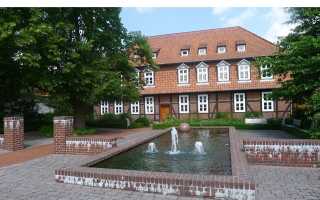
In 1945, Prof Dr Fritz Sennheiser, accompanied by seven fellow engineers, rented an old, modest farmhouse surrounded by open fields in the village of Wedemark, near Hanover, Germany. At the time, in the years before the audio industry had even been conceived, it must have seemed an unlikely place to start a manufacturing company. Yet the small team, named Laboratorium Wennebostel, or Labor W for short, quickly set about the hard work of creating history.
Fast forward almost 70 years and hundreds of visitors travel to Wedemark every year to see the fruits of that work. Much has changed. Where once there were open fields, there are now towering manufacturing facilities. Every corridor and corner within the sprawling maze of offices and factory floors crackles with activity. New buildings reach capacity as soon as they are completed, and plans are always afoot for further expansion. Yet at the far end of the village-sized premises, in the midst of the high technology, the farmhouse still stands, a powerful reminder of the long heritage of Sennheiser electronic, the company it helped to spawn.
But if history always feels nearby in the headquarters of Sennheiser, then so do thoughts of the future. On the day that Pro Audio Asia pays a visit to Wedemark, a very different kind of office is on the mind of Daniel Sennheiser, the company’s president of strategy and finance, and the grandson of the company founder.
Whilst many in his position would demand the trappings of success – a private, plush office set apart from employees – Mr Sennheiser is instead busy moving into a light and airy open plan area. Its windowed walls look out onto public spaces where staff members gather for lunch, and it is fitted with simple, functional desks. Soon the entire Executive Management Board will follow, abandoning private offices and instead sharing desk-space, computers, telephones and, most importantly, ideas.
‘We will sit together because we need to collaborate,’ agrees the president, speaking in a humble meeting room above the new office. ‘Over time we would like the whole company to work like this and we’re trying to lead by example. I’m the first one moving in today and I’m convinced we’re going to have less meetings because we’ll already know what’s going on.’
The office is the kind of area that a visitor might expect to find in a youthful start-up. A small, energetic company where creativity and the ability to move quickly are the most valuable currencies. It is also precisely the kind of environment in which Mr Sennheiser’s grandfather shared inspiration with his colleagues in the 1940s.
Fritz Sennheiser sadly passed away two years ago, having reached the age of 98, but he is fondly and respectfully remembered throughout the industry, often simply referred to simply as ‘the Professor’. His enduring legacy is, his grandson argues, partly due to the inclusive approach that the company is once again spearheading.
‘I guess it comes from the fact that he was very much focused on people and delivering something that enriched people’s lives,’ Mr Sennheiser reflects. ‘That’s what we all strive towards – we want to give people the freedom to do the right thing. That’s really, in essence, what he did, he realised that he could not do everything himself, that he had to have a team of people, and the team had its own intelligence. What he did very well and very early was to give them the freedom and the independence to come up with a good solution. Then he trusted them with that solution. I think that’s why people look up to him, because they felt that trust and it makes people proud.’
The connection is just another example of the delicate balance between the past and the future that the company has struck over its decades of expansion – a balance that the president of strategy and finance represents best of all. For him, the story of Sennheiser is deeply personal, a history of family ties writ large across the industry in which he now works. Together with his brother Andreas, president of the Supply Chain Division, Daniel Sennheiser is passionately helping to inspire the third era of the company’s evolution, but his unique perspective informs every plan that he champions.
‘I think of my grandfather first as my grandfather, and second as the founder of the company,’ he explains. Of the chairman of the supervisory board, Prof Dr Jörg Sennheiser, he adds: ‘I think about my father as my father, then as my boss.’
Even the factory itself holds vivid memories for him. ‘I have childhood memories of playing in the metal dump with all of these little pieces, and cutting my fingers on them,’ he laughs. ‘It took me a while to realise that I was in a different environment to some of my friends who were from the area. I think it took me until I was six or seven years old before I realised that not everybody has a factory! For me it was just normal and that’s a good thing because you treat everybody the same.’
Indeed, when Daniel Sennheiser speaks about his family and the organisation it continues to lead, his sense of humility is striking. The president of strategy and finance is quick to smile and share an easy joke, deeply enthusiastic and eager to share his ideas. He feels no sense of entitlement to his position, and was not always even convinced that he would join the family business at all.
‘I wasn’t always sure that I would want to work for Sennheiser – it took me quite a while to come to that conclusion,’ he explains. ‘The question that made me hesitate for a while was “what else can I bring to this?”
‘I’m driven by trying to contribute to something – I’m not doing it for the name or the glory. Sennheiser has always been an engineering driven company and I’m not an engineer, I’m more of a marketing communications person. So in the beginning there was a mismatch. But over time, by working elsewhere and learning what a marketer can do by focusing on innovation, I realised what I could bring in terms of really deep customer understanding from the marketing side. I realised that there’s a beautiful match between the technical competency of this company and bringing in a more design and marketing oriented approach to innovation. It needs both sides. I saw those things come together and thought “okay, now this makes sense”. When I had that realisation I thought to myself that this is a big gift.’
While the shift in working environment for Mr Sennheiser and his colleagues on the Executive Management Board (EMB) is itself a significant sign of the change that the manufacturer is currently undergoing, it is only one small part of a far larger plan. Sennheiser arguably began its third era in 2010, with a fundamental reorganisation of the entire global operation and the creation of the EMB itself.
In another neat nod to Sennheiser’s farmhouse origins, the EMB is comprised of seven units, each led by its own president. Joining Daniel Sennheiser in the new office is Dr Heinrich Esser as president of professional systems, Peter Claussen as president of integrated systems, Paul Whiting as president of sales, Dr Andreas Sennheiser as president for the supply chain area, Volker Bartels as president of corporate services and spokesperson for the Board, and Peter Callan as president of consumer electronics.
‘We’re trying to turn the company around in a time when we’re actually doing very well,’ Mr Sennheiser declares. ‘It’s not as if we have our back against a wall or anything like that – usually that’s when a company changes. But we initiated this partially through a generation change – my brother and I taking on responsibilities – and also because of the move to become a divisional organisation. We realised that we are so big now that we need to be more responsive to our customers. We didn’t want to wait until our customers told us that we needed to do something, we wanted to be proactive.’
The last time that Sennheiser adopted such a far-reaching strategy was arguably the launch of the evolution range of wireless microphones, a decade ago. At the time, the company invested huge funds into the construction of a new automated manufacturing facility capable of producing 3,000 microphone capsules every day. It was a tremendous gamble for a brand that was strong in broadcast but keen to reach into the lucrative MI and semi-professional markets. Today the evolution wireless range is in its third generation, having proved an overwhelming success.
Shortly after this issue of Pro Audio Asia goes to press, another milestone product launch is due to take place in Wedemark. But although Mr Sennheiser hints that the product in question ‘has the potential to be with us for the next 10 to 15 years’, its role in the creation of the company’s new strategy has been minimal.
‘What we’re launching has probably been a 12 or 15 year development,’ he explains. ‘We’re not changing in one big way and then waiting for it to pay off, as with evolution. Instead, the change that we’re initiating now is continuous, there all the time. Really focusing on the customer and constantly reinventing ourselves – that’s what we’re trying to achieve. We need to constantly question ourselves and be on this quest for perfect sound, for the next little bit of progress, and you need to manifest that change physically.
‘You cannot simply tell everybody to change; you need to shake them up a little bit. People get comfortable, especially in a company that is in good shape like Sennheiser. We want to stir that up in a positive way using the momentum that my brother and myself are bringing in. The generation change is just a method, but I think that right now you can feel quite a lot of dynamic energy in the company. We have altered almost every reporting line in the organisation and people are behind this. People are seeing the success, and the freedom and independence that brings, the decision making power that they get. That enables the passion that everybody has.’
Recalling the trust that his grandfather demonstrated in his staff, and the success that it invited, Mr Sennheiser adds: ‘One of my bosses once told me “only do what only you can do”. I’ve tried to live by that. It’s so easy to get caught up in so many things that people want you to do but there are certain things that only I can do, and that’s true of everybody in the company. So if everybody focuses only on the things that only they can do, that nobody else can do, then we will be the most effective. That’s the essence.’
When Mr Sennheiser describes the ‘virtuous cycle’ of independence that he believes comes as a result of Sennheiser’s private ownership, his enthusiasm is palpable, and he argues that it is perhaps even more crucial to the company’s ongoing success than its balance sheet.
‘As a company we want to be profitable,’ he clarifies. ‘We are profitable and we have to be because that is a way of remaining independent. It means that we can make the right decisions based on our customers. The independence is really what drives us. In my opinion and my experience, that’s the big difference between a publicly run company and a family business. A public company will look a lot at their shareholders and then sometimes spend time on customers. We basically spend all of our time on customers, understanding them. We can meet the shareholders at lunch… and now in the office!’
Throughout his conversation with Pro Audio Asia, Mr Sennheiser frequently returns to the subject of his customers, a topic that clearly motivates him. Alongside his work in the Wedemark headquarters, he leads a small team in Zurich looking at long-term innovation, and as a result he frequently travels to visit Sennheiser users around the world. ‘I’m very accessible,’ he grins. ‘I’m not here in the office waiting for somebody to call me, I reach out all the time. I have four clocks with all the time zones, which helps me! You get into a routine of travelling and I like to see our people.’
Inevitably, his travels extend into Asia, where the brand continues to thrive. This year marks the 20th anniversary of the Singapore-based subsidiary Sennheiser Asia, while further subsidiaries in China, Japan and India are forging ahead in powerful markets. ‘They are doing a very good job for us,’ he agrees. ‘Once we do these things we do them with the right long-term plan, we don’t just test the water. I’m always positively surprised by how proud our employees are, and our customers as well. I get into funny situations when I visit customers and they start selling me the product more than I have to sell it to them.’
He quickly adds, however, that ‘they also tell me the bad stuff – that’s the reality of a two-way relationship. We shouldn’t forget that we are only able to do what we are doing because we are serving a customer. You need to have that humility in order to be open to the customer, because their needs change. You cannot become complacent.’
Perhaps for that reason, when PAA points out how much Sennheiser has grown since those early days in the farmhouse, the founder’s grandson quickly counters with the argument that he prefers to think of the company as ‘still small. It still feels small. It feels like a family company because it is a family company, and that’s not only the Sennheiser family, the people who have the Sennheiser name, it’s our employees, our distributors and our customers as well. It feels small.’
The open fields that surrounded Prof Dr Fritz Sennheiser when he first came to Wedemark have been filled with offices, factory floors, cutting edge technology and hundreds of devoted, passionate employees. But the farmhouse remains, and so does the family.