
Marine life
Published: ASIA
Sentosa is continuing its evolution into a major tourist attraction, not least with the addition of Marine Life Park. Richard Lawn takes a dip.
For a tiny island with a land mass of just 5 sq-km lying half a kilometre off the southern coast of Singapore, the Lion State’s fourth largest island certainly packs a punch. Renamed Sentosa in 1972, which in Malay means peace and tranquillity, the island’s Sentosa Development Corporation (SDC) was formed to oversee the development of the area. Since then, almost S$1 billion of private and government funds have been pumped into regenerating the island. It’s a far cry from when it was referred to as Dead Island, resulting from the malaria infestations of the 19th Century, the killing fields of World War 2, or the erected forts that characterised its 1960s skirmish with neighbouring Indonesia.
At the turn of the millennium, a visitor would have to either travel by an overhead cable car or by tolled transportation over the causeway to the island in order to visit its few attractions, including an Underwater World. Fast forward to the present day, however, and the Sentosa Express monorail and new Sentosa Boardwalk brings in 5 million tourists each year, attracted by the 2km long sheltered beach, Fort Siloso, two golf courses, five-star hotels and the colossal Resorts World Sentosa, featuring the theme park Universal Studios Singapore. In addition, Tiger Sky Tower, the Butterfly Park and Insect Kingdom, Merlion Statue, Songs of the Sea, Sentosa 4D Magix, Sentosa CineBlast, Fort Siloso, MegaZip Adventure Park, Azzura Beach Club and Sentosa Luge & Skyride all ensure that the acronym for Sentosa of ‘So Expensive Nothing To See Also’ has been consigned to the vaults of history.
Ten years is also a significant time span when comparing the A/V technology incorporated into the earlier attractions with those of today. Leading Singaporean distributor and systems integrator Electro-Acoustic Systems (EAS) has been drafted to the island on numerous occasions, bringing with it over three decades of A/V experience. Keeping up to date with the technological advances provided by the manufacturers it represents in the region is no mean feat. However, EAS is never short of leading projects into which it can quickly incorporate the latest cutting edge products as A/V solutions into their real world designs.
Having been invited to install the sound reinforcement, BGM and paging system into Universal Studios Singapore in 2007, EAS unwittingly notched a world first by installing a QSC Audio Q-Sys Core 4000 processing system as the audio backbone of the huge theme park in early 2010. Sentosa is a work in progress and following the satisfactory completion of the design, EAS was invited back to tender for another system destined for the adjacent Marine Life Park in April 2011. Working closely with the main general contractor, Sembawang Engineering, and DP Architects Pte Ltd together with Acviron Acoustics Consultants, EAS tendered to supply and install the A/V systems throughout Marine Life Park, which incorporates the world's largest oceanarium SEA Aquarium and Adventure Cove Waterpark, in addition to the Equarius Hotel, Lazy River and the associated food and beverage outlets.
The development comprises one QSC Audio Q-Sys Core 1000 processors and seven I/O Frames in the five control rooms, which combine to perform all the audio routing and processing whilst handling all the control functions. A further Core 1000 processor has been added to the rack, providing full redundancy. Utilising a Cisco SG300-20 port Gigabit Managed Switch, the centralised architecture of this 64 x 64 platform provides complete flexibility in addition to simplified system redundancy, in which any input can be routed to any output without confused signal paths. Single node fibre-optic cabling connects the main control room with the five smaller ones. However, with the five control rooms located throughout the development, each equipped with an I/O Frame (two of the rooms have two frames), the architecture has been de-centralised. Although the structure is centralised, it can physically locate the input and output connections near their sources and destinations using additional I/O Frames, which can each accommodate up to four I/O cards – such as a 4-input mic/line input card – enabling up to 16 channels of input and/or output in a single unit.
Adventure Cove Waterpark comes with six waterslides in addition to many other attractions including a hydro-magnetic coaster, Bluwater Bay wave pool and the Adventure River, which allows one to journey 620m through tropical jungle gardens, canyons and grottos on an inflatable rubber tube. Naturally, there’s no escape from the sound reinforcement system, from the foyer area to the rest rooms. Yet Marine Life Parks’ proximity to the coast together with Singapore’s equatorial heat and almost daily thunderstorms ensures that any outdoor speaker system is going to be severely tested with heat, humidity, salinity and rain constantly attacking the cabinets. EAS selected its speaker cabinets very carefully, not only matching the correct speakers for the varied applications, but also ensuring each one was IP64 certified before installation.
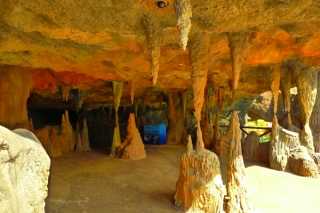
Whilst the grotto caves plays bat noises through discrete Tannoy Di6 speakers, jungle sounds emit from the 63 Soundtube XT850 green speakers hidden along the walkway garden plants and bushes. As in phase one, US composer David Kneupper produced the effects and music for Marine Life Park. Once completed, it was downloaded and programmed into the Core 1000 processor. The individual zoned levels were then adjusted by an EAS engineer in the control room in communication with another engineer on location. The Q-Sys Scheduler ensures that the technical manager need not even worry about turning the system on or off as it does so automatically at 8am and 8pm each day.
Powering the entire system is a large inventory of rack mounted QSC Audio ISA300Ti, CX204V, CX302V, CX602V and CX702V two- and four-channel amplifiers in the five control rooms. Seventy pole-mounted weatherised Tannoy Di6T 100-v line speakers receive their zoned audio along the Lazy River. Seven larger Di8T speakers are dedicated in the Dolphin Pool area owing to the higher ambient SPL levels, whilst five smaller Di5T line speakers welcome the visitors at the turnstiles. Visitors are invited to snorkel or wade amongst the 20,000 colourful reef fish in the pool, which has been installed with eight pole-mounted Renkus Heinz CFX121 12-inch speakers. The 500W-rated, self-powered, 90-degree by 60-degree complex conic designs provide constant beam width/directivity in the spectator gallery.
S.E.A. Aquarium is the world's largest aquarium, containing some 45,000,000 litres of water for 100,000 marine animals. The aquarium comprises 10 zones with 49 habitats, of which the Open Ocean habitat is the centrepiece. It contains the world's largest viewing panel, measuring 36m wide x 8.3m tall, allowing visitors to feel as though they are on the ocean floor. The Aquarium also comprises one Q-Sys Core 1000 processor, but with just two I/O Frames for the two controls rooms in the 500m length facility. Two IC-Live F speakers are located at either end of the 36m viewing panel, providing watching visitors with whale song and aquatic noises. Once again, the Q-Sys Scheduler has been programmed and the zoned exhibits receive their ambience and spoken word via Soundtube CM82 ceiling speakers, powered by QSC Audio CX302V and 404V amplifiers.
Supporting the rides and attractions are six F&B outlets such as Café Grotto and the Bay Restaurant, in addition to three retail stores including Reef n Wave Wear. Once again, the BGM is supplied by the Centralised Music System to the CM62 speakers, but these outlets operate over a Biamp Nexia CS system rather than the Q-Sys 1000 processor. The Biamp Select 8 wall panels connected to the Nexia CS mainframe allow the facility manager to enable or disable up to eight source and eight volume settings when desired. ESPA utilises a central Core 1000 frame whose signals are the routed out to all the various villas and spas. AMX keypad controls the individual levels and offer four various sources for the headsets built into each spa treatment chair. Once again, a Soundtube CM62 ceiling speaker solution is shared with Tannoy Di5T wall mounted speakers. Finally, the eco-friendly Equarius Hotel is situated at the west of the resort in lush tropical rainforest and is equipped with a Biamp Systems AudiaFLEX processor.
The Core 1000 64 x 64 matrix may be smaller in size and less powerful than the 512 x 512 matrix built into the heart of Universal Studios Singapore, but it is probably more complex in its design, integrating five control rooms in a decentralised architecture. Rather than carrying on where it left off in phase one, EAS has returned to its large drawing board and designed a very detailed, bespoke sound system reflecting the needs of its customer. Audio is all around. Perhaps the time has arrived for this tiny island to be renamed once again, for peace and tranquillity are now in short supply.