
Shure solution used for fire safety film
Published: ASIA
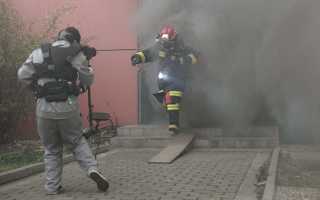
CHINA: Film director Wang Yazhen recently used a Shure FP wireless system to capture the sound for a short film about fire safety in Kunshan to be shown online, in theatres and on displays in public places.
A total of two films were produced to teach viewers 20 facts about fire safety, and used 16 actors. ‘It occurred to me that there weren’t very many actors, and most of the dialogue took place while the actors were moving, which would put constraints on the film crew carrying the shotgun microphone and boom pole,’ said Mr Yazhen. ‘As the budget was tight, the FP1 bodypack transmitter and FP5 portable receiver paired with a lavalier microphone and an AFP shoe mount with accessories, such as audio cables, were absolutely perfect. My impression of the setup was that it was convenient, flexible and practical.’
Filming a scene the first day involved shooting in a narrow fire escape, requiring the actors and cameraman to run down four flights of stairs to the first floor through a corridor 1m wide. ‘Shouldering a steadycam, the cameraman was unlikely to be willing to let the sound engineer carry the pick-up microphone and block the path behind him,’ Mr Yazhen explained. ‘Besides, it’s difficult for a sound engineer to control the pick-up angle in an action shot like this, so getting rid of the shotgun microphone plus the boom pole was a good choice. We filmed directly with the FP1 with a MX150 lavalier mic and an FP5 outputting to a 5D Mark II, which recorded the sound signal.’
When the footage was played back, Mr Yazhen reports that the sound was ‘very clear, with good directionality. This is where Shure’s strengths lie,’ he said. ‘The next day, our sound engineer decided to be “lazy” and reattach the FP5 to Canon 5D Mark II hot shoe when filming action scenes. When the audio cable was attached, he was ready for anything – no additional microphones were needed. He put the FP1 and the FP5 head to head, and with a one-touch operation the green light lit up, indicating it was ready for syncing the transmitter to the receiver frequency. The assistant cameraman got it in one go and took over immediately.
‘The system impressed me greatly,’ he enthused. ‘The FP1 with a battery weighs about the same as a cell phone, and the FP5 receiver weighs about twice as much. The device has a low-profile shape, with discreet and sleek design, matching the 5D Mark II.
‘In the final stages of reviewing the footage, a professional arrived who knew a lot about technology and had years of filming experience,' he furthered. ‘After editing some material, the first thing he said was, “great sound recording”. Many people tend to ignore sound production when filming and just focus on image quality. In a class I took taught by well-known sound engineer Zhan Xin, he once said something along these lines: “Whether a film has authenticity and a sense of immersion is largely determined by the quality of its sound production. It’s an important part of the experience for the audience. Good sound production and high quality acoustics are a key part of the film chain. Without it, it is impossible to give the audience an ideal viewing experience”. The FP wireless system is easy to operate, has outstanding audio quality and is durable and reliable to work with. Anyone can afford the system, and it’s worth a try for small and medium-sized production groups as well as amateurs,’ he said.
‘We are glad to see that videographers and independent EFP producers are now willing to put more of an emphasis on achieving higher audio quality,’ added Andy Yao, senior product specialist, Shure Shanghai branch. ‘When Mr Yazhen came to us for a portable and easy used solution to improve the audio quality for his project, we recommended the FP system. We spent short time explaining how the FP system works and the director was convinced with its simple and flexible components’