
The principles of design
Published: ASIA
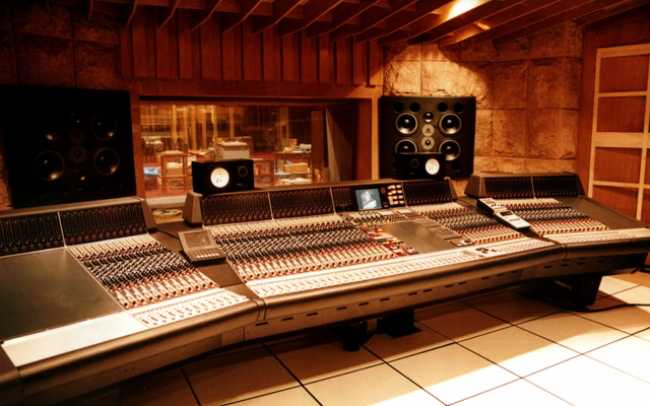
World-renowned studio designer Andy Munro has worked extensively in Asia since the early 1990s. Caroline Moss discovers why his work travels so well.
Andy Munro has had an unerring knack of being in the right place at the right time. After studying for a degree in mechanical engineering in 1972, Mr Munro’s love of music led him straight to a job at Shure. For five years he assisted bands including the Rolling Stones and Led Zeppelin with their microphone requirements, both on tour and in studios in Nashville, New York and Chicago, and this involvement with acoustics would shape his future career.
Mr Munro formed Munro Acoustics in 1980, just as the studio industry in Europe and the US was entering a golden era. During the 1980s, large, well-equipped studios became a regular fixture on the schedules of any band with a recording budget, and lengthy sessions prevailed, from the writing process through to the final mix. The commercial studio industry flourished, together with the market for private facilities, and Mr Munro’s studio design work took off concurrently.
‘My first studios were for rock stars with private estates and a need for tax relief,’ he recalls. ‘What Munro Acoustics does is create environments for great artists to produce their best work. We are engineers and designers with a passion for great sound.’
The first fully commercial project was for producer Mike Hedges, who went on to record hits for Travis and the Manic Street Preachers. Other noteworthy credits include London’s Air Studios, Powerplant and Sphere, Windmill Lane in Dublin, Tony Bennett’s New York facility, Mark Knopfler’s British Grove and Nitin Sawney’s private studio.
As the company evolved, Mr Munro started his own monitor brand in partnership with Danish manufacturer Dynaudio. ‘At that time most of the studios we designed chose UREI813 monitors, but I was unhappy with the high frequency sound,’ he says. ‘I preferred the sound of soft domes and by a process of elimination I chose Dynaudio for the superior qualities of both sonic fidelity and power handling.’ The joint Dynaudioacoustics venture was formally inaugurated in 1989, and today the range includes the C3 and C4 three-way studio monitors, the M4 four-way high power reference monitor and Munro’s custom designs, tailored to specific requirements.
‘The most successful system we have ever designed is the M4,’ says Mr Munro. ‘It is large, expensive and requires careful acoustic design and installation. I think this system has all the qualities of the best hi-fi but it is capable of extreme volume without compression or distortion degrading the sound. We have installed these systems in every major recording centre in Asia and the pure sound favours the high pitch of female voices in a way that horns and compression drivers simply cannot emulate.’
It was working with Joe Gonsalves at Pace Communications, Dynaudio’s first Indian distributor appointed in 1990, that paved the way for Munro Acoustics’ studio design work in Asia. ‘Through our contact with Joe we started designing studios and consulting with film and recording studios,’ explains Mr Munro.
Then came the call from Famous that was to establish Mr Munro on the subcontinent and set new standards for Indian studios. In 1995 he was contacted by the Mumbai-based facility’s technical director, Farhad Dadyburjor, who had visited SSL’s new Munro-designed demo room in the UK, featuring customised Dynaudio M3 5.1 monitoring. Mr Dadyburjor decided his room at Famous needed the same treatment, and Mr Munro subsequently went on to design all five audio studios at the facility, arguably kick-starting India’s education in acoustic design as well as Munro Acoustics’ considerable success in the country.
‘When we designed the M2 and M3 Dynaudio Acoustics monitor systems back in the early 1990s I did not anticipate they would become a standard reference in India, and I have to thank Famous for having the faith to go with our concept of loud hi-fi as opposed to just plain loud,’ says Mr Munro. The company has since worked extensively in India, designing studios, clubs and facilities for Indian clients including AR Rahman, the Blue Frog nightclub in Mumbai, musician Salim Sulaiman, Big TV and Sahara Studios.
Shortly after Mr Munro began working on the subcontinent, he was approached to do some work for CCTV, China’s major broadcaster. This involved designing a brand new broadcast facility in Shanghai and revamping the existing 1950s facility in Beijing. Several other projects, mainly in the broadcast sector, have followed, including Shanghai Film and TV. Munro Acoustics’ services were also in demand in Japan from an early stage, and the company has designed studios for Fun House and other large record companies. To date, the biggest single project for Munro Acoustics in Asia has been Megaforce in Taipei, which has four SSL studios, all equipped with M4 monitor systems.
The diverse musical traditions of different regions can play a part in Mr Munro’s work. ‘As in Europe, these differences can be both complex and sometimes difficult to understand,’ he says. ‘It is crucial to accept each market on its own terms, at the same time emphasising a unified acoustic theory based on the unshakable belief that there is only one true sound. There is a natural order to the way we hear which I find can translate into any established culture. There is more distortion of this order in Western music than in Asia so in some ways our philosophy is more accepted in Japan or China than it is in London! There are several common roots in music, some going back to Celtic times and I have heard minor pentatonic scales in the Beijing Academy of Ancient Music as well as Memphis.’
The Middle East has also provided some challenges for Mr Munro. ‘Without doubt this region is by far the most complex in terms of business and cultural protocols,’ he says. ‘I have enjoyed working in Turkey for many years and the Imaj complex in Istanbul, which has many studios and post-production facilities, is one of the largest we have undertaken.’
Other Istanbul projects include the Sutluce Cultural Centre, which boasts one of the largest acoustically designed auditoria in the world, and the National Basketball stadium in Istanbul. In Turkmenistan, Munro has designed the acoustics and sound systems for the National Theatre in the capital, Ashgabat. ‘We have done less work than perhaps we should have in the Gulf States but hopefully we can expand our operations in that area,’ muses Mr Munro. ‘We have a unique combination of acoustic and sound reinforcement design experience that would be very useful to the local cultural scene.’
Mr Munro often works with clients who are making the transition to digital, and whereas this has happened gradually in the West as the technology has evolved over time, many of the studios he has worked with, particularly in parts of Asia, have leapfrogged the evolutionary process, arriving directly in the digital domain. There are consequent lessons to be learned about the strengths and weaknesses of digital.
‘For me, the whole recording process has to start with analogue instruments and voices,’ he reasons. ‘There is a quality that can only be captured and blended using a combination of air and space. Once the sound is in electronic form it can then be captured and edited but it must have a physical origin to be unique and therefore interesting. I was listening to an FM rock station in LA a few weeks ago and every track sounded the same, with the digital guitar processing and sequenced drums. Initial impressions are usually good but interest wanes with over-familiarity. Digital audio is great for keeping something real but it has to be real to start with!’
In 2005 two key new staff members, Kapil Thirwani and Chris Walls, joined Munro Associations from Salford University. Both had been studying for an MSc in Audio Acoustics, with Mr Walls having previously completed a degree in Music and Acoustics. Mr Thirwani now runs Munro Acoustics’ business from Mumbai having spent several years working in the UK. Mr Walls is a studio designer at Munro Acoustics in London, working with a team which also includes architect Clive Glover, CAD specialist Andy Lewis and speaker designer and all round acoustician Phil Pyatt, also a Salford graduate.
‘Our current team provides us with enough talent to take Munro Acoustics forward and ensure our skills are always up to date,’ says Mr Munro. This was recently proved when the company won a bid to build 28 studios for the new BBC Broadcasting House in central London.
Munro Acoustics continues to push the boundaries of monitor design and build, creating the Egg 150 monitoring system in 2011 in conjunction with Chinese manufacturer sE Audio. Company founder Siwei Zou, a talented classical musician, studied at the Shanghai Conservatory of Music and went on to become a successful conductor and composer, working with the Shanghai Opera and Philharmonic Orchestra for several decades. The Egg is manufactured at Mr Zou’s factory in Shanghai and further models are being planned for the sE Munro monitor range.
It is clear that a large part of Munro Acoustics’ success is down to diversification, and the company’s latest project, the development of off the shelf, self-assembly acoustic panelling, is no exception.
‘Putting acoustic treatment on the walls or ceilings simply does not work,’ Mr Munro explains. ‘However as the days of big budget studios wane across the world, we need to help people who might not have the budget for a complete acoustic design. We’re developing a range of acoustic panels that we can produce here and ship to the end user, with instructions on how and where to fit them. As technology has reduced in cost, studios have become smaller and are no longer commercial facilities; these days we’re working with engineers, producers and musicians who need somewhere for their own projects. So we must adapt to the current market climate and provide what is needed.’
This philosophy has stood Munro Acoustics in good stead for the past 32 years, and seems more relevant than ever in today’s recording climate.