
Allen & Heath reveals new generation of digital mixers
Published: MEA
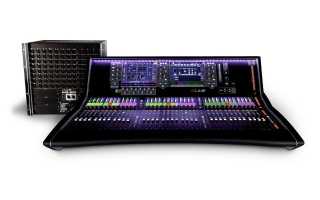
WORLD: Flexibility is the key factor for Allen & Heath’s new generation of digital mixing consoles, dLive. The console series features a distributed design with three separate MixRack processing engines and the same number of control Surfaces which are all compatible and feature common configuration, setup and show files. The manufacturer describes the new series as ‘the ultimate mixing system’, and believes it has ‘the fastest workflow in the industry’.
The three MixRacks – the DM32, DM48 and DM64 – all contain the same processing engine which has been developed by the Allen & Heath R&D team. ‘Focusing on feedback from our customer base and key engineers, we have developed a new Allen & Heath technology base for live mixing,’ explained Allen & Heath’s R&D director, Dr Rob Clark. ‘The XCVI Core is designed from the ground up to execute our DEEP Processing algorithms from within the FPGA channel processor core. This unique architecture allows users to select various embedded processing models on every input and mix channel on the fly, without burning valuable FX slots or adding latency.’
The 96k/96bit XCVI Core provides capacity for 128 inputs with full processing and 16 dedicated stereo FX returns, offering 160 inputs to mix, plus a fully configurable 64 mix bus architecture, with full processing on all 64 mix channels. dLive incorporates the DEEP processing portfolio of embedded plugins, including graphic EQs, compressors, multiband compressors and dynamic EQs, alongside its 16 slot FX racks, featuring Allen & Heath’s range of FX emulations.
Remote I/O expansion is provided at both the MixRack and Surface through dual-redundant Cat-5 DX ports. This enables connection of up to three modular DX32 expansion units. Further inter-system and network connectivity is available through five resident 128 channel I/O ports for a range of audio networking cards, including Dante, Waves SG, ACE, and Madi, with a fibre optic option also under development.
The three choices for the Surface are the S3000, S5000 and S7000. The Surface layout is fully customisable. Every input or mix can be assigned to any bank and layer, named and colour coded, and the engineer has 26 assignable SoftKeys at their disposal. Key to the design is the new Harmony UI which integrates screen and wrap-around controls with a single or twin 12-inch capacitive touchscreen, gesture control, configurable widget areas for scenes, meters and FX. There is also illumination control for visibility in daylight or low light conditions, including backlit keys, RGB coloured encoders, and an integrated LED light strip. Alternative mixing control is provided via MixPad and OneMix apps, Editor on/offline software, TCP/IP control for third party integration, and network-enabled IP fader and rotary remote controllers.
The console series is aimed at the touring and festival market as well as installation into live venues. It has a pro touring grade chassis which has reportedly been optimised for weight and rigidity. All units have dual power supply slots for redundancy, with PSUs hot swappable between Surfaces, MixRacks and Expanders. Dual redundancy is also built into every audio connection throughout the system.