
How can we encourage more women to join the industry?
Published: MEA
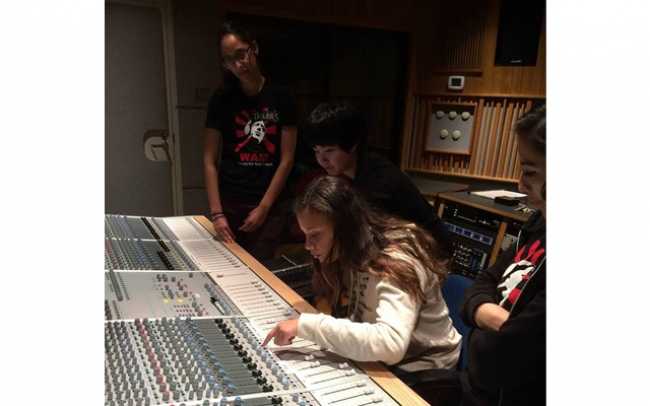
Pro audio is a male dominated industry, and this needs to change. Historically there has been a huge skew in the percentages of men and women working in the sector, particularly in the more technical roles. This has slowly begun to change in recent times, but the industry as a whole still needs to do more to encourage larger numbers of women to consider a career in pro audio.
The key reason for this is achieving a more balanced workforce and all the business benefits this entails. ‘I think balance is the key in everything,’ says Michelle Sabolchick Pettinato, live sound engineer and co-founder of Sound Girls. ‘Women bring a different perspective and qualities than men and anything that brings balance is always beneficial. Most of the tour managers and production managers I’ve worked with tell me they like having a woman on the crew because it brings the whole level of testosterone down a notch.’
‘I think it is important to recognise the assets that each gender brings to the industry including a feminine and personal touch that sometimes is very unique to a woman,’ adds Jennifer Willard, president of J Technology Solutions and founder of Women in AV. ‘The overall message is that when we recognise, respect, and honour the contributions and assets of each gender, it reflects back to us all as a great and cohesive whole that tends to be more welcoming, encouraging of taking risks and thinking outside the box, as well as the task master who will not cut corners.’
There are several organisations across the world trying to achieve this gender balance, and the key to their success would appear to be training and visibility. Take the Women’s Audio Mission (WAM) in San Francisco for example. Since its inception 12 years ago, this all-female managed and operated recording studio has seen over 6,000 women and girls pass through its doors. This is set to increase further. Following the recent move to a new location, the facility can now train 1,200 women and girls a year through its combination of adult and middle school classes.
‘It’s an inspiration for middle school girls when they walk into the control room. It’s a great way to attract them to technology in general because once you get them into that room, they don’t want to come out,’ says Terri Winston, WAM’s executive director. ‘We actually use it as a broader attraction point for all sectors, not just audio. If they just get into something that’s technical, we’re happy. Our expertise is recording arts so we use that to get them interested in all of the other things, whether that’s broadcast, live sound, or computer science.’
The recording studio is not alone in using educational opportunities as a way to increase female participation in the industry. Australian public broadcaster, ABC, has been running a scholarship for women studying broadcast technology for the last 20 years.
‘The ABC had almost no women working in this key technical support area. As part of a broader equity and diversity plan, the ABC focused on increasing the number of women working in the ABC in the early 1990s,’ explains ABC’s deputy director of technology, Margaret Cassidy. ‘The ABC now has around 10-11 per cent of women working in technical support roles. It has also showcased the broadcast sector to students studying broader electro-technology courses at TAFEs (Training and Further Education) in Australia. There are no current specifically broadcast technology or broadcast engineering courses available in Australia as the broadcast industry is so small.’
There are a variety of training options available to women who are interested in joining the pro audio industry. But one of the key challenges is ensuring there is also a visible career path that can be taken after they have completed their training.
‘They need role models, access to information and education that is going to give them real world skills. Mentors, internship opportunities, and support,’ says Karrie Keyes, live sound engineer and co-founder of Sound Girls. This is something the organisation is trying to do through its website. ‘We are providing role models for them – we feature a profile on a woman in the industry each month. We are providing them access to the information and education they need. We are working on providing mentors and internships, volunteer opportunities to work and mix shows for hands-on experience. We are launching a live sound camp programme for girls aged 12-18 this summer and hope to get industry wide support.’
‘Broadcasters could provide women with the work experience to get them the exposure to get that first job,’ adds Ms Cassidy. ‘Successful scholarship winners come into the ABC and take the opportunity – are keen, demonstrate initiative and are offered further employment opportunities. We now have some of the early scholarship winners moving into supervisory roles as well which is excellent as it provides further role models.’
The positive news is that the proportion of women working in the industry is increasing. However, this is not always in the more technical side. ‘We repeatedly see in our Women in AV membership demographics that sales, marketing, and administration are the top three functions performed by females in the A/V industry,’ says Ms Willard. ‘In itself, that statistic does not automatically equate to there being anything wrong. We tend to view STEM industries with the technology they provide to the market while marginalising the critical support functions that play an equally significant role in determining ultimate success or failure.’
Despite this statistic, Ms Willard believes there is also an increasing number of women joining the technical side of the industry. ‘I’ve seen a significant shift in the number of technical women in our industry. It is aligned with the overall evolution of women’s role in the broader context of society that once dictated women were nurses and men were doctors.’
She is not alone in seeing this change. ‘From when I first started in the late ‘80s there are definitely more,’ adds Ms Sabolchick Pettinato. ‘Karrie Keyes was the only other woman I had known of for years. Now I meet more every day. When I first started touring I was always hearing, “you’re the first female engineer I’ve ever seen.” Now I hear, “Do you know so and so (another female engineer)?”.’
Ms Winston agrees with the point, but does add a note of caution. ‘I’m seeing a change, I’m very positive. I think it’s moving slowly, it’s not moving as quickly as I would like to see it obviously because we are pumping out 6,000 women and we’re still not seeing all of them persist, which means they’re not loving that space. I think the issue for colleges across the world is persistence. We can get them that first job, but it’s hard to keep them in a career, and that says a lot about the environment. They can do it, they’re interested, they’re trained and we got them in that first job but they’re not staying. Why is that?
‘I’ve been speaking to people in Asia, and in Japan in particular, and they say there’s a huge number of women working in live sound,’ she continues. ‘There’s an instance where somehow they’ve got it so that environment is working, women are into it, they’re staying and they’re liking it. There are definite lessons to be learned from that.’
The truth of the matter is that the pro audio industry does have a growing proportion of dedicated, talented and hard working women fulfilling a variety of job functions. In order to increase that proportion we must all be quicker to offer opportunities, support and importantly, celebrate their achievements. You never know who it might inspire.
www.abc.net.au
www.soundgirls.org
www.womeninav.com
www.womensaudiomission.org