
Retrofitting an icon
Published: MEA
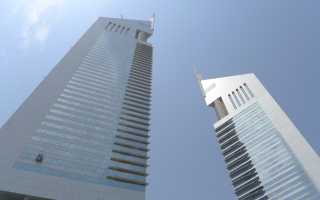
The building boom in Dubai created a number of iconic structures around the city, but what happens when their A/V systems reach the end of their lifespan? James Ling visits the Jumeirah Emirates Towers to find out.
Set amongst the statement architecture of downtown Dubai, the angular twin structures of the Jumeirah Emirates Towers have long been an iconic feature of the city’s skyline. Long before the likes of DIFC and the Burj Khalifa rose out of the sand along the Sheikh Zayed road, the Emirates Towers stood proud as a symbol of what was to come.
Unsurprisingly then, when Ateïs Middle East opened its Dubai office in 2006, this was one of the ‘dream projects’ it wanted to be a part of. While the towers had been up and running for a number of years, their stature meant that any work carried out there would represent a statement project that would underline the achievements of the manufacturer in the region.
Fast-forward six years and the now well-established local office has done just this with the retrofit of a completely new PA/VA system into the Jumeirah Emirates Towers. ‘We were asked by our distributor BMTS to look at the overall design of the project and the possibility of removing the old system and retrofitting a new Ateïs public address/voice evacuation solution,’ recalls Ateïs Middle East managing director Hussam Al Haddad. ‘The original system was built 12 to 13 years ago, and at that time the technology available compared to what we have today, there is no comparison, there was much less available in the technology then. We changed the core of the system but kept the speaker circuits as they are.’
The different areas of the Jumeirah Emirates Towers are well-known, with three sections offering very different uses. The 350m office tower and its slightly shorter twin, the hotel tower, are connected by a central podium of shops and restaurants – the Boulevard. Each of these areas has different regulations that the PA/VA system needed to meet, and they all had to be integrated into one synchronised system.
‘For us it was quite easy because we have got all of the towers integrated together through fibre optics,’ explains Mr Al Haddad. ‘One ring of fire-rated fibre optic carries 48 audio channels of Ateïs CD-quality audio between all of the 16 racks. We had to pull a brand new network. It had to be fire rated because it is not only carrying the music, it is carrying the evacuation part of it too. We have done this riser with a new pull, and being a riser it is easy to pull because there is always the access to do it. That was managed properly and professionally by our distributor BMTS.’
While the system was able to handle the requirements of the project, what made it more difficult was that it needed to be installed while the complex was at 100 per cent occupancy. ‘There are different challenges with a retrofit. In a brand new building you can see everything on a plan. The design has been put into a plan, you can see the project while it is going, you have the flexibility to pull the cables that you wish at the size that you wish and you can have a look at the project overall from the drawings which makes it easier to analyse,’ reasons Mr Al Haddad.
‘Moving to a site which is occupied is a challenge because you need to understand how it works, you need to fit the pieces of the puzzle together to see the bigger picture, you need to get to areas where there isn’t easy access, so it’s quite challenging,’ he continues. ‘The second part is trying to understand the old cause and effects and how to comply with it. You need to look at the old cause and effect and make sure you understand what the client wants, and you deliver that.’
The way Ateïs Middle East tackled this was by using its local facility to design, build and test the new system before it was moved to the site. ‘We wanted to make sure that everything was as per the client’s satisfaction. Rather than doing it at site, we did the complete build of 16 racks at the factory, then tested, commissioned, programmed, checked and re-checked. So a lot of testing happened behind closed doors at our offices in Dubai Silicon Oasis before we moved the readymade racks,’ explains Ateïs Middle East chief engineer Haider Al Attar.
‘Before we touched the old system we made sure the entire network was in full operation, fully programmed as per the requirements of the client and then we started to move the speaker circuits from the old system to our solution,’ continues Mr Al Attar. ‘It was quite a smooth transition, but it still took a couple of months to do that because the site is huge. After that it took a couple of weeks to do the final testing, commissioning and hand over. The entire project lasted about four to five months. Within that, it was a complete retrofit changeover which went smoothly and it’s now running through our system completely.’
The new solution installed in the towers is based around Ateïs’ IDA and LAP systems. The 16 racks offer 48 channels of audio integrated with the fire alarm system plus 32 further channels per rack for redundancy. Added to this, three touchscreen paging mics have been installed in various locations around the complex to ensure the correct announcements are being made.
While there is a fair amount of new equipment that has been installed, one aspect that remained from the original system was the speakers. ‘Around 97 to 98 per cent of the speakers were working fine. They are all fire-rated speakers, they are all prepared and ready for voice evacuation, Penton is a worldwide brand that is very much known in the industry for evacuation speakers and audio systems and for us it was a quite easy shift as we were confident of the quality. Penton is a sister company to Ateïs,’ says Mr Al Haddad.
‘For the ones that weren’t working there was a quick change of speaker,’ he continues. ‘The system is very intelligent, we do impedance monitoring on the circuits. We know how many speakers are on each circuit, so we know the total impedance of the circuit. Our system is quite intelligent and measures the impedance of the line. If the system is measuring half the impedance, we know the problem is around half way, if it’s measuring 75 per cent we know the problem is in the last quarter of the circuit. So even identifying where the problem was with the Ateïs system was easy for us.’
With the new system in place, the project moved into a final phase of on-site testing. The emergency use of the solution meant that testing the new system both in the factory and in-situ was a key element. ‘You cannot take chances with a PA/VA system. With such a massive structure and such a brand name you need to make sure that each and every bit of the program works fine before you move to the actual site,’ says Mr Al Haddad. ‘If you have a new site you have enough time to physically test on site. But when you have an occupied site, you cannot do that. You need to make sure everything at the back of house has been tested, commissioned and is working fine and then you move a readymade system.
‘Having said that, even after we moved everything into the site, we found with one or two zones there were some conflicts and some issues which we were able to resolve very quickly,’ continues the MD. ‘With the huge number of speaker circuits on this project, doing it another way would not have been a wise decision.’
While Mr Al Haddad is clearly very proud of completing one of the original ‘dream projects’, he is still insistent that the functionality the solution offers is the most important thing. ‘Our vision out of this is to give to the end user the confidence that the Ateïs system will protect lives and the Ateïs system will deliver the message to their customers,’ he explains. ‘It is not only about providing a system, the most important thing is that when the evacuation happens, people can comprehend what the messages are and get the direction to get outside the building. That is the main purpose of a voice evacuation system.’
With the slowdown of building projects in evidence, it now looks as if the systems integration business in Dubai is entering a new phase. While companies are increasingly looking outside the Emirate for landmark new developments, there will be expanding volumes of work as the buildings from the Dubai boom look to refresh their systems. This will require a different outlook and a different way of working, but the retrofit business should provide a fresh challenge for many.
The skyline may not be changing as rapidly anymore, but the iconic installations are still there as retrofits. For companies like Ateïs that entered the market with a list of dream projects, these could now be back on the table.